ADA Compliant Portable Restrooms and the Duty of Entrance Clearances
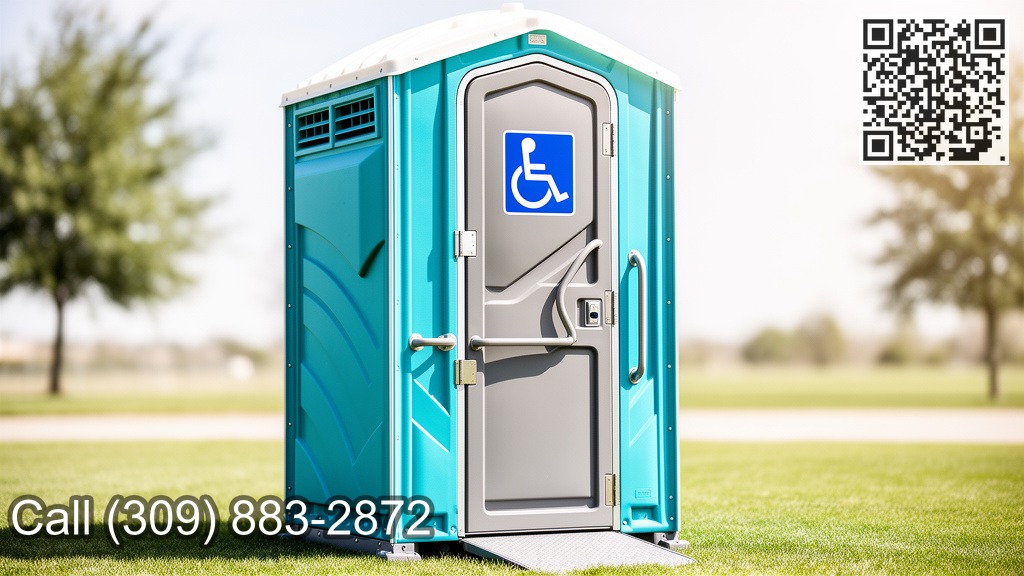
When people speak about an ADA compliant portable washroom, they often imagine the bigger unit with the mobility device icon on the door and quit there. In method, that icon is just the beginning. Real ease of access relies on a series of conditions collaborating, and among one of the most important pieces because series is the entrance.
If the individual can not approach the door safely, open it without unpleasant pressure, or move through the doorway with sufficient clearance to maneuver, the unit might exist on paper yet stop working in reality. That is why entryway clearances matter so much. They are not a minor technological detail. They shape whether an ada obtainable portable washroom is useful with self-respect, or whether it becomes another barrier dressed up as compliance.
I have seen this space sometimes in the field. A rental firm delivers an ada portable restroom. The coordinator really feels happy since they checked the ease of access box. After that the system obtains positioned on soft ground, squeezed as well near a fence, or set at completion of a slim course churned up by foot web traffic. The portable restroom itself might be the right model, but the experience of reaching and entering it is not available. That detach is where issues begin.
Accessibility starts before the door opens
The government baseline in the United States originates from the 2010 ADA Standards for Accessible Design, as interpreted by the Gain access to Board and the Department of Justice. For mobile commode rentals used in public or event setups, accessibility is not limited to the indoor format. The criteria additionally call for an available path and an accessible entrance, and any type of needed ramps or landings need to fulfill the relevant technological requirements.
That factor is simple to miss because mobile systems are short-lived naturally. Individuals often tend to treat short-term centers as less official, less exacting, or somehow outside the normal regulations. They are not. Short-term does not imply optional. A person using a mobility device, pedestrian, scooter, cane, or various other flexibility help still requires to reach the system and into the device equally as much at a one-day celebration as at an irreversible building.
Entrance clearances sit right at the intersection of course, doorway, maneuvering, and interior usage. If one part stops working, the remainder can fail with it. A spacious inside does not help a lot if the user can not straighten with the door. A certified door does not assist much if there is no stable means to approach it. An easily accessible ramp does not solve the issue if it ends in a cramped landing that does not permit appropriate maneuvering.
The portable restroom itself is only component of compliance
An ada compliant mobile commode needs to satisfy more than one expectation at the very same time. The device needs to be part of the needed accessible count in a cluster. It should be related to the International Sign of Ease Of Access. It must attach to an easily accessible route. It needs to give an easily accessible entrance. It should also please the toilet area technological demands that use, including transforming room, fixture clearances, door steering clearances, and the applicable grab bar and water closet clearance rules.
That last expression, door steering clearances, is where entryway preparation comes to be extremely concrete. It advises us that a doorway is not simply an opening in a wall. A useful entrance has to support real body movement, assistive device positioning, and the mechanics of opening and passing through the door. Individuals do not enter these devices as abstract dimensions. They approach from an angle, time out, reach, readjust, pull or push, after that move through. Good configuration values that sequence.
I have actually located that event organizers and website supervisors generally understand interior room more conveniently than entryway clearance. Interior room really feels visible. You can step within and state, "Yes, this appears roomy." Entry clearance troubles are extra subtle. A door can look vast adequate and still be challenging to make use of because of the surrounding conditions. That is why skilled operators examine the entire technique, not simply the box.
Why entry clearances carry a lot weight
Portable restrooms stay in imperfect settings. Unlike permanent structures, they are commonly positioned on lawn, crushed rock, loaded dirt, asphalt sides, or momentary staging areas. They may be surrounded by crowd-control barriers, secure fencing, utility cables, camping tent weights, or parked service lorries. Little placement selections develop big consequences.
Consider a guest reaching an outdoor event after dark. They locate the ada handicap available portable restroom and head towards it, only to locate that the path narrows near the door since an additional unit was included also close next to it. Or the ground inclines sufficient that positioning at the entryway becomes uncomfortable. Or the door swing requires them into an uneasy angle since there is not enough useful area to maneuver. In each instance, the trouble turns up at the entryway, also if the coordinator technically rented the best group of unit.
The entrance is also where anxiousness spikes. Many individuals are already doing silent computations: Can I arrive? Can I open this on my own? Will I require assist? Is the ground steady sufficient? Am I holding up a line? That psychological piece matters. Ease of access is not just concerning legal risk or formal conformity. It is about minimizing rubbing for individuals who have actually invested years managing spaces that were not made with them in mind.
The 5 percent guideline, and why positioning influences whether it truly works
For collections of portable single-user commode devices, at the very least 5 percent of the systems in each collection must be accessible. The Gain access to Board has actually explained that this applies even at momentary events. That is a substantial factor because portable toilet banks prevail at festivals, fairs, races, concerts, and area celebrations where individuals sometimes assume a single accessible device someplace on the grounds is enough.
It is inadequate to scatter ease of access as an afterthought. The need uses by collection, which means access has to be distributed where people are really using washrooms. That matters for entry clearances because available systems are just helpful when each certain placement supports entrance. If one collection includes an ada certified easily accessible mobile washroom however it is successfully blocked by crowding, unequal configuration, or inadequate approach problems, the sensible value of the called for unit goes down sharply.
A collection can satisfy the count and still produce a disappointment if the easily accessible system is positioned on the fringe, put versus a fence line, or positioned where service gain access to took concern over individual accessibility. I have actually seen planners make that choice because the larger unit occupies more space. The instinct is easy to understand, yet it typically backfires. The bigger impact is specifically why the device needs much more assumed around the entry, not less.
What "easily accessible entry" truly means in practice
The criteria require an easily accessible path and entrance, and they need that any required ramps and landings abide by the ADA technological guidelines. They additionally call for door steering clearances. Also without stating technical measurements, that structure informs us a lot.
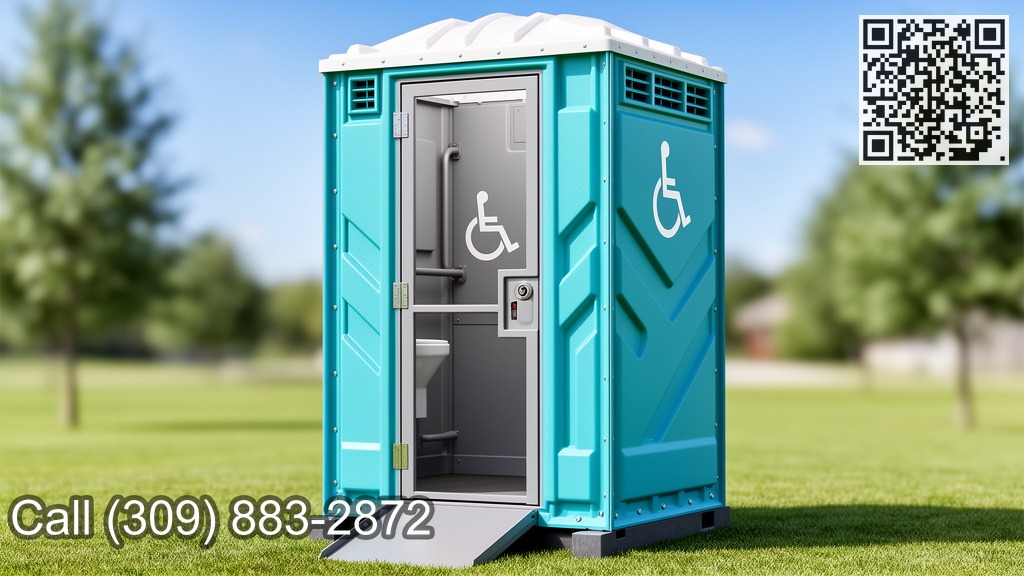
An easily accessible entrance is not just a door that opens. It is a door that can be gotten to, come close to, and used by someone who may need additional room to straighten, turn, or stabilize prior to moving through. The area instantly outside the door needs to work as part of the bathroom experience, not as remaining space.
In useful terms, experienced groups pay attention to just how an individual will come to the entrance. Will they come right on, or will they require to angle around one more system? Does the ground support a smooth method? If a ramp is required, does it result in a touchdown that makes the entrance usable rather than just obtainable? When at the door, exists sufficient room for the individual to take care of the door and continue via without obtaining trapped by a tight corner or clashing obstruction?
Those are not picky concerns. They are the difference between independent usage and stopped working access.
Common configuration errors that threaten certified units
Most availability failures with portable toilets are not remarkable. They are ordinary configuration choices made under time stress. The rental order may correctly request an ada mobile bathroom rental. The delivered system might certainly be an ada-compliant portable toilet. The break down normally happens at placement.
Here are the mistakes I see most often:
- Placing the easily accessible device on a course that is technically present yet difficult to utilize in real conditions.
- Crowding the entry with obstacles, fence, or adjacent systems that disrupt maneuvering.
- Adding a ramp or landing without checking whether it really sustains entrance at the door.
- Treating the wheelchair icon as evidence of compliance without examining the bordering space.
- Waiting up until the website is fully developed out, after that attempting to squeeze the easily accessible system into what remains.
Each of these mistakes transforms entryway clearance into a weak spot. None needs bad intent. Most come from strangeness with exactly how people relocate with room when they use wheelchair tools. That is why site testimonial matters more than assumptions.
The connection between the entry and the interior
A well-designed ada compliant portable washroom does not separate the doorway from the inside. The requirements tie them together via transforming space, component clearances, door maneuvering clearances, and suitable grab bar and water wardrobe regulations. This develops an essential preparation lesson. The useful path continues past the threshold.
Imagine a device with the appropriate interior transforming space, but the doorway positioning requires an awkward entrance angle. Or a device with a sufficient entryway location outside, once the individual goes through the door there is no smooth shift right into the interior handling area. Ease of access needs to feel continuous. If the entryway requires a stretched, multi-step workaround, the interior design may not be reachable in the means it was intended.
This is especially crucial for users who value privacy and independence. Many people do not intend to ask a companion to consistent a door or reposition a wheelchair gadget at the limit. They intend to enter, close the door, make use of the room, and departure without support. A good entry clearance sustains that average autonomy.
Temporary events are still genuine environments
One of the a lot more persistent false impressions is that short-term occasions get even more flexibility merely because they are short-term. The Access Board's advice explains that the accessible device scoping applies also at short-lived occasions. That ought to change how coordinators think.
A weekend arts celebration, a county fair, a charity walk, a community event, or a seasonal exterior market might only exist momentarily, but also for guests those rooms are no much less real. Moms and dads bring kids. Older adults go to. Individuals manage persistent problems, injuries, and disabilities. Some have noticeable mobility limitations, others do not. Availability can not be treated as ceremonial.
There is likewise a sensible side to this. Ease of access failures end up being really noticeable at events because individuals are navigating under public conditions, typically with lines and time stress. An improperly positioned ada portable bathroom can develop a traffic jam, require personnel intervention, and leave visitors feeling singled out. Entrance clearance issues are usually the trigger due to the fact that they appear right away when the individual arrives at the unit.
Construction websites are a diplomatic immunity, but not a broad escape hatch
There is a vital difference in the criteria history entailing portable bathroom systems at building websites used solely by building personnel. That setup was treated differently under the portable-toilet ease of access scoping demand in the mentioned 1991 requirement. Some individuals listen to that and erroneously think portable washrooms are typically exempt or freely regulated.
That is not the situation for general mobile commode leasings. Public-facing rentals still carry the accessible-unit demand, along with the broader technological expectations around course, entry, and toilet-room use. It is worth stating this distinction due to the fact that it often creates complication in discussions with specialists, venue managers, or procedures teams who move in between building and construction setups and public event settings. The regulations are not interchangeable even if the tools looks similar.
How to think about entry clearances during planning
The strongest plans start with the user journey, not the devices order. Before the systems get here, it assists to envision a guest relocating from the main blood circulation course to the available unit, entering it, and leaving it. That mental walkthrough catches even more problems than a final aesthetic scan.
A simple planning technique normally functions ideal:
- Decide where each cluster will be located, remembering that at least 5 percent of the systems in each collection have to be accessible.
- Reserve sufficient bordering area for the accessible unit's method and entry prior to positioning standard devices, fence, or equipment.
- Verify that the system will certainly attach to an easily accessible path and that any type of required ramps or landings can follow the applicable ADA technological requirements.
- Check that the entryway area sustains genuine door maneuvering, not just theoretical access.
- Recheck the setup after close-by event framework is installed, given that barriers and last-minute adjustments usually produce new conflicts.
That last step saves an unexpected variety of events. On paper, a website may look fine. When camping tents, barriers, generators, or vendor cubicles are in location, the entry clearance can transform drastically. The accessible system should be examined in its last context, not in isolation.
Why empathy belongs in compliance work
The word "compliance" can make this subject noise chilly, but the very best availability work is deeply human. An ada compliant portable bathroom is not simply a https://pristineportablesil.com/festival-services/ regulative thing. It is part of whether someone can stay at an occasion conveniently, function a complete shift, support a youngster outdoors, or participate without embarrassment.
I keep in mind a conversation with an occasion volunteer who told me, almost apologetically, that she had never thought of the area outside the toilet door. She presumed the bigger interior was the whole tale. After that she viewed a guest strategy an easily accessible unit that had actually been boxed in by temporary fence. The visitor stopped, examined the angle, retreated, and needed help. It was not a remarkable scene. That is what made it remarkable. It was common, quiet, and preventable.
That is frequently how accessibility failures really feel to the people impacted by them, not loud, just wearyingly acquainted. Great entryway clearances aid disrupt that pattern. They enable people to relocate with the day without having to negotiate another avoidable barrier.
Accessibility belongs to a broader conformity culture
Recent ADA activity across fields has strengthened a more comprehensive reality: accessibility responsibilities are not fading into the background. They are being examined in more locations, consisting of digital spaces. That larger enforcement climate issues since it shows exactly how availability is increasingly comprehended, not as a specific niche specialized, however as a basic assumption of public participation.
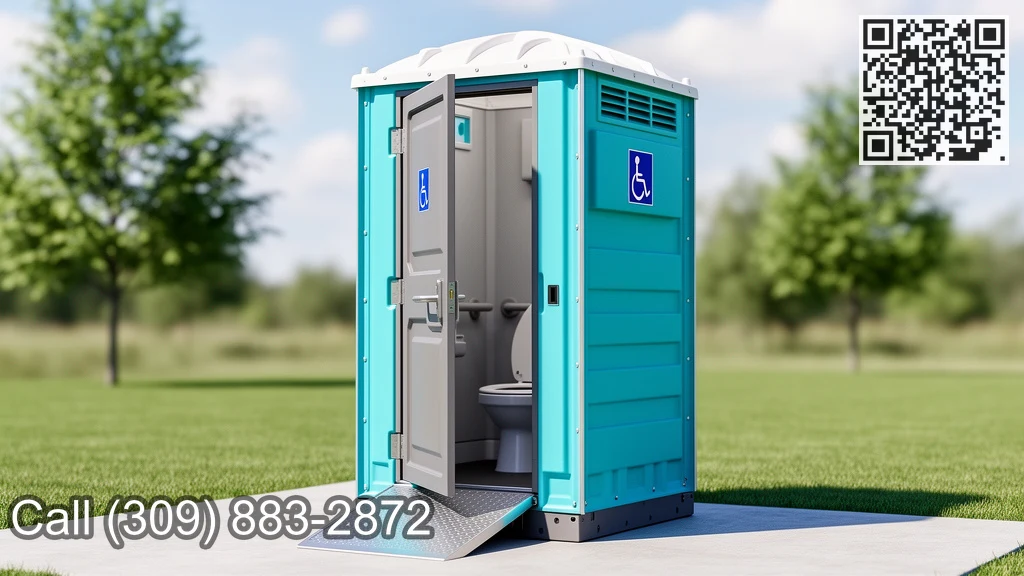
Portable hygiene belongs because conversation. If an organization focuses on signage, web sites, ticketing, and customer communication, it ought to pay the very same attention to physical accessibility at the restroom door. The requirement may be technological, yet the assumption is basic. If you invite the public, people should have the ability to use the facilities provided.
A better conventional for "sufficient"
There is a temptation in portable restroom planning to go for minimum stability. Lease one ada mobile toilet, put it someplace near the others, and carry on. However "adequate" usually collapses at the entryway. The user does not experience your list. They experience the path, the ground, the strategy, the door, and the area available to maneuver.
That is why the duty of entry clearances should have more interest than it normally obtains. It is the location where available layout comes to be either sensible or performative. A genuinely useful ada compliant mobile bathroom is not only present, yet friendly and enterable without unnecessary strain.
When occasion coordinators, rental providers, and site supervisors recognize that, their choices enhance. They quit asking just, "Did we order the ideal system?" and start asking, "Can someone really utilize it individually when they arrive?" That 2nd inquiry is the one that matters.
An ada compliant portable toilet should do greater than please a line thing. It needs to work for the person standing in front of it. Entry clearances are main to making certain it does.
 Ask ChatGPT
 Ask Grok
 Ask Perplexity
 Ask Claude
 Ask Google AI
 Ask You